The Role of HPMC F50 in PVC Compounds: Improving Melt Rheology and Processing Stability
Hydroxypropyl Methylcellulose (HPMC) F50 is a functional cellulose ether widely used as a processing aid in polyvinyl chloride (PVC) compounds. Owing to its balanced molecular weight and controlled substitution degree, HPMC F50 plays an important role in optimizing melt rheology and improving overall processing stability during PVC compounding and forming operations such as extrusion, calendering, and injection molding.
One of the primary functions of HPMC F50 in PVC systems is melt rheology regulation. During PVC processing, controlling melt viscosity is critical to ensure smooth material flow, uniform shear distribution, and stable processing torque. HPMC F50 acts as a rheology modifier by promoting more uniform fusion of PVC particles. It reduces internal friction between resin grains, allowing the PVC melt to reach a stable, homogeneous state at a lower and more controllable shear rate. This improved melt flow behavior helps prevent processing defects such as melt fracture, die swell, and uneven wall thickness in finished PVC products.
HPMC F50 also contributes significantly to processing stability by widening the processing window of PVC formulations. PVC is inherently sensitive to temperature and shear, and unstable processing conditions can lead to degradation, discoloration, and poor mechanical performance. By enhancing melt elasticity and reducing localized shear stress, HPMC F50 helps stabilize the melt under varying processing conditions. This leads to smoother torque curves, more predictable fusion times, and reduced risk of thermal degradation during continuous production.
Another important advantage of HPMC F50 is its positive interaction with other PVC additives. In typical PVC compounds, lubricants, stabilizers, and fillers must work together efficiently to achieve optimal processing performance. HPMC F50 improves the dispersion of these additives within the PVC matrix, preventing agglomeration and phase separation during melt processing. As a result, the compound exhibits more consistent rheological behavior from batch to batch, improving production repeatability and reducing scrap rates.
The improved melt rheology provided by HPMC F50 enhances downstream forming processes. In extrusion and calendering, a stable and well-controlled melt allows for smoother surfaces, better dimensional accuracy, and reduced die buildup. In injection molding, it contributes to more uniform cavity filling and lower internal stress in molded parts. These processing benefits ultimately translate into higher-quality PVC products with improved appearance and performance.
HPMC F50 plays a crucial role in PVC compounds by improving melt rheology and enhancing processing stability. Through better fusion behavior, reduced shear sensitivity, and improved additive dispersion, HPMC F50 helps manufacturers achieve efficient, stable, and high-quality PVC processing across a wide range of applications.
How HPMC F50 Enhances Lubrication, Fusion Behavior, and Dispersion in PVC Formulations
Hydroxypropyl Methylcellulose (HPMC) F50 is an effective multifunctional processing aid in PVC formulations, where it contributes to improved lubrication balance, optimized fusion behavior, and enhanced dispersion of additives. These functions are critical for achieving stable processing conditions and consistent product quality in rigid and flexible PVC applications.
In terms of lubrication, HPMC F50 provides both internal and external lubrication effects within the PVC melt. Its polymeric structure forms a thin, flexible film around PVC resin particles during heating and mixing. This film reduces friction between particles and between the melt and metal surfaces of processing equipment. As a result, torque fluctuations during compounding are minimized, energy consumption is reduced, and smoother material flow is achieved during extrusion or molding. Unlike conventional lubricants that may migrate or cause surface defects when overdosed, HPMC F50 delivers controlled lubrication without negatively affecting surface quality or mechanical properties.
Fusion behavior is another key area where HPMC F50 demonstrates significant benefits. Proper fusion of PVC particles is essential for achieving uniform melt structure and optimal mechanical performance. HPMC F50 promotes more even heat transfer and shear distribution throughout the compound, allowing PVC particles to fuse gradually and uniformly. This controlled fusion process helps avoid under-fusion, which can lead to poor strength and surface roughness, as well as over-fusion, which increases the risk of thermal degradation. By stabilizing fusion time and fusion torque, HPMC F50 widens the processing window and improves operational reliability, especially in high-speed or continuous production lines.
HPMC F50 also plays an important role in enhancing dispersion within PVC formulations. PVC compounds often contain stabilizers, fillers, pigments, and impact modifiers that must be evenly distributed to ensure consistent performance. Due to its excellent compatibility with PVC and other additives, HPMC F50 acts as a dispersing aid, preventing agglomeration of fine particles during mixing and melt processing. Improved dispersion leads to more uniform color, better mechanical properties, and reduced defects such as streaking or weak points in finished products.
The combined effects of enhanced lubrication, optimized fusion, and improved dispersion contribute directly to better processability and product consistency. PVC formulations containing HPMC F50 exhibit smoother extrusion, reduced die pressure, and more stable melt flow. Finished products benefit from improved surface finish, dimensional stability, and reliable performance across different production conditions.
HPMC F50 enhances PVC formulations by providing a balanced lubrication system, promoting controlled fusion behavior, and improving additive dispersion. These synergistic effects make HPMC F50 a valuable processing aid for manufacturers seeking efficient processing, reduced production variability, and high-quality PVC products.
Impact of HPMC F50 on Surface Finish, Mechanical Properties, and Dimensional Stability of PVC Products
Hydroxypropyl Methylcellulose (HPMC) F50 is widely used in PVC formulations not only for its processing benefits but also for its positive impact on the final properties of PVC products. By improving melt homogeneity, additive dispersion, and fusion quality, HPMC F50 contributes significantly to enhanced surface finish, mechanical performance, and dimensional stability across a wide range of PVC applications.
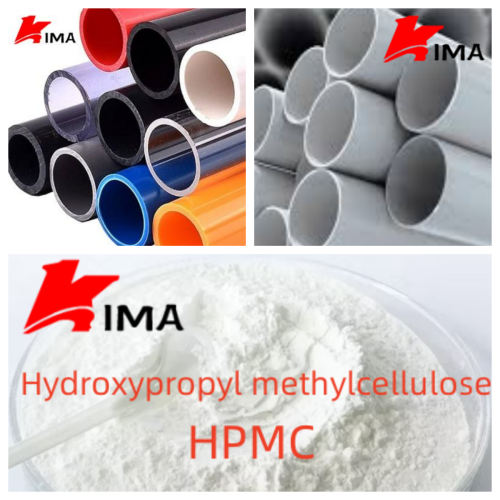
One of the most visible benefits of HPMC F50 is the improvement in surface finish of PVC products. During extrusion, calendering, or injection molding, uneven melt flow and poor dispersion often lead to surface defects such as flow marks, rough textures, or die lines. HPMC F50 promotes smoother and more uniform melt flow by reducing localized shear stress and stabilizing viscosity. This results in PVC products with smoother surfaces, improved gloss, and more consistent appearance. Additionally, better lubrication at the metal–melt interface reduces die buildup, helping maintain clean tooling and consistent surface quality during long production runs.
HPMC F50 also plays an important role in enhancing the mechanical properties of PVC products. Proper fusion and uniform dispersion of fillers and modifiers are essential for achieving optimal strength and toughness. By facilitating controlled fusion of PVC particles, HPMC F50 helps form a dense and homogeneous polymer matrix. This uniform structure improves tensile strength, impact resistance, and elongation at break, particularly in rigid PVC formulations. In filled systems, improved dispersion minimizes stress concentration points, reducing the likelihood of cracks or premature failure under mechanical load.
Dimensional stability is another critical performance aspect influenced by HPMC F50. PVC products are often exposed to thermal cycling and mechanical stress during service, which can lead to warpage, shrinkage, or deformation if internal stresses are unevenly distributed. HPMC F50 contributes to dimensional stability by promoting uniform melt flow and balanced cooling during processing. Reduced internal stress and more consistent fusion behavior result in PVC products that maintain their shape and dimensions more reliably over time.
The use of HPMC F50 enhances batch-to-batch consistency in PVC production. Stable rheological behavior and improved dispersion ensure that finished products exhibit predictable physical properties, reducing quality variations and improving overall production efficiency. This consistency is especially important in applications such as pipes, profiles, sheets, and fittings, where tight dimensional tolerances and long-term performance are required.
HPMC F50 positively impacts PVC products by improving surface finish, enhancing mechanical properties, and increasing dimensional stability. Through better melt uniformity, controlled fusion, and reduced internal stress, HPMC F50 helps manufacturers produce high-quality PVC products with reliable performance and superior appearance.
Selecting HPMC F50 for Different PVC Processing Methods and End-Use Applications
Hydroxypropyl Methylcellulose (HPMC) F50 is a versatile cellulose ether widely used as a processing aid in PVC formulations. Its ability to regulate melt rheology, improve fusion behavior, and enhance additive dispersion makes it suitable for a variety of PVC processing methods. Selecting the appropriate HPMC F50 grade and optimizing its dosage are critical for achieving consistent processing performance and high-quality end products.
In extrusion processes, such as the production of PVC pipes, profiles, or sheets, HPMC F50 plays a key role in stabilizing melt flow and reducing die pressure. Uniform melt viscosity ensures smooth extrusion and prevents defects such as surface roughness, streaks, or flow marks. For extrusion applications, HPMC F50 should be chosen with a molecular weight that balances internal lubrication and viscosity control. Too high a molecular weight may increase torque and reduce throughput, while too low a molecular weight may compromise fusion and dispersion of fillers and stabilizers. Typically, moderate molecular weight HPMC F50 grades are preferred for extrusion, as they provide optimal lubrication without negatively affecting product strength.
In injection molding, where rapid and uniform cavity filling is essential, HPMC F50 improves fusion kinetics and enhances melt homogeneity. This results in PVC parts with smoother surfaces, precise dimensional accuracy, and reduced internal stresses. For injection molding, selecting an HPMC F50 grade with good thermal stability and fast fusion promotion is important, ensuring the melt fills complex molds efficiently while maintaining consistent mechanical properties. Lower viscosity grades can help achieve faster fusion and reduced cycle times in high-speed molding operations.
Calendering applications, such as producing PVC sheets or films, benefit from HPMC F50 through improved dispersion of pigments and fillers, resulting in more uniform thickness and surface quality. Here, the choice of HPMC F50 should emphasize high solubility and excellent dispersion properties to maintain uniformity during continuous processing. Grades that promote stable melt flow under moderate shear are ideal, as they prevent sheet distortion and ensure consistent dimensional properties.
End-use applications also influence HPMC F50 selection. For rigid PVC products like pipes and profiles, the focus is on mechanical strength, dimensional stability, and surface smoothness, which require moderate molecular weight and well-balanced lubrication. For flexible PVC products, such as films, cables, or soft profiles, lower viscosity grades that enhance fusion and dispersion without over-thickening the melt are preferred.
Selecting HPMC F50 for PVC formulations requires careful consideration of the processing method, melt behavior, and final product requirements. By choosing the right grade and optimizing dosage, manufacturers can achieve improved process stability, enhanced surface quality, consistent mechanical properties, and reliable dimensional stability across diverse PVC applications.


 English
 日本語
日本語 français
 Deutsch
 Español
 العربية
 Türkçe
 italiano
 русский
 português
 Nederland