The global coatings industry is undergoing a major transformation driven by environmental regulations, sustainability goals, and rising performance expectations. Traditional solvent-based coatings are being rapidly replaced by water-based systems, which offer lower volatile organic compound (VOC) emissions, improved safety, and better environmental compatibility.
Among the key raw materials enabling this transition, Hydroxyethyl Cellulose (HEC) plays a critical role. As a water-soluble non-ionic cellulose ether, HEC is widely used as a thickener, rheology modifier, stabilizer, and dispersing agent in water-based coatings.
Its ability to control viscosity, improve application properties, and stabilize pigment systems makes it indispensable in modern paint formulations. This article explores how HEC is shaping the future of water-based coatings and transforming formulation and performance across the industry.
What Is Hydroxyethyl Cellulose (HEC)?
Hydroxyethyl Cellulose is a chemically modified cellulose derivative produced by reacting alkali cellulose with ethylene oxide.
Key characteristics:
Non-ionic polymer
Water-soluble thickener
Excellent rheology control agent
High compatibility with pigments and additives
Stable across a wide pH range
HEC is widely used in:
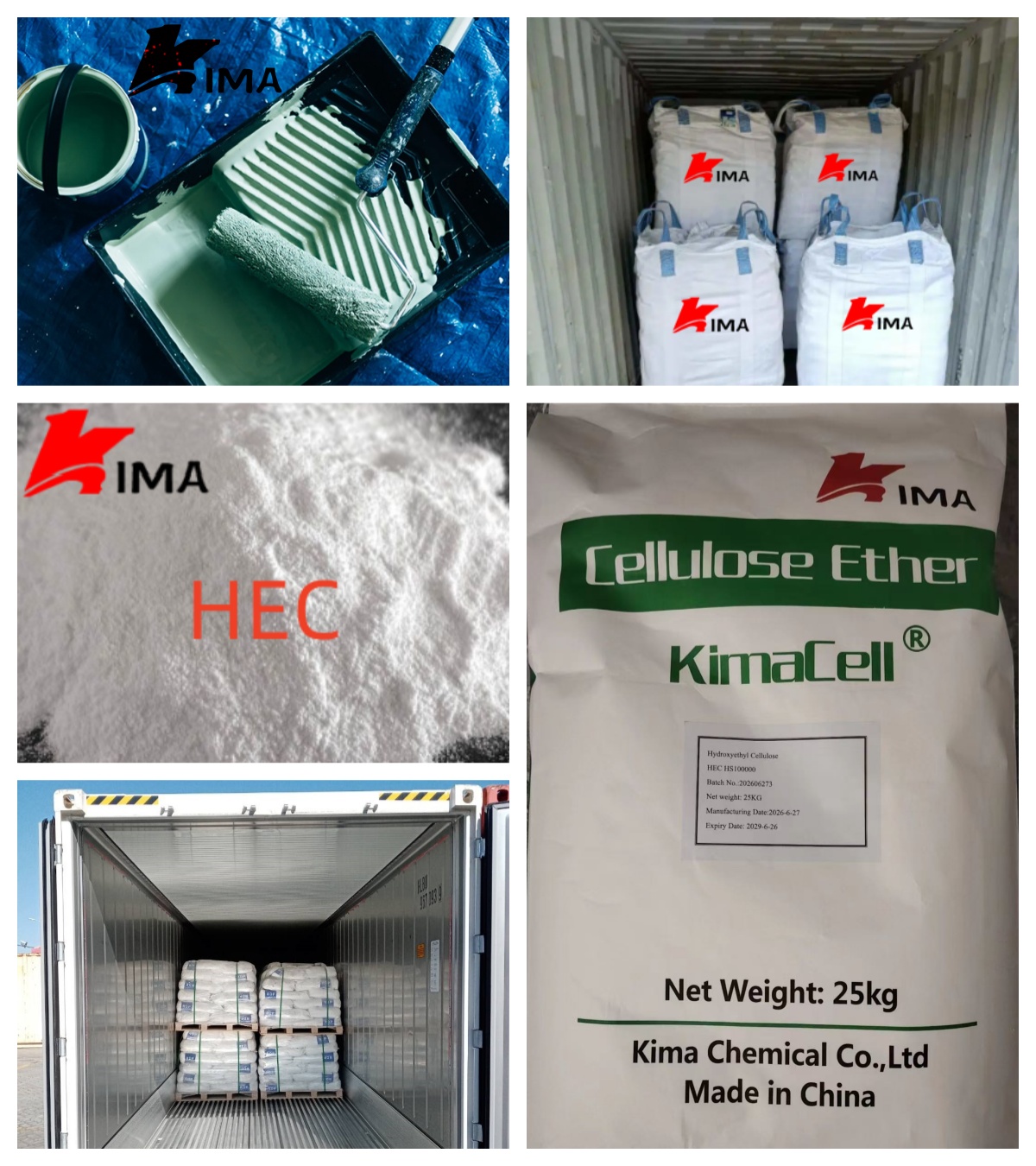
The Shift Toward Water-Based Coatings
The coating industry is rapidly moving away from solvent-based systems due to:
Environmental regulations on VOC emissions
Health and safety concerns
Demand for sustainable materials
Improved performance of water-based systems
Water-based coatings now dominate architectural paints, industrial coatings, and decorative finishes.
However, water-based systems require advanced additives to match the performance of solvent-based coatings—this is where HEC becomes essential.
Role of HEC in Water-Based Coatings
HEC performs multiple critical functions in coating formulations.
1. Thickening Agent
HEC increases viscosity and ensures proper consistency of coatings.
Benefits include:
2. Rheology Modifier
HEC controls flow behavior in coatings.
It ensures:
This helps coatings achieve uniform surface finishes.
3. Stabilizer for Pigment Suspension
One of the most important roles of HEC is stabilizing pigments and fillers.
It prevents:
Sedimentation
Flocculation
Phase separation
This ensures long-term storage stability.
4. Water Retention and Open Time Control
HEC slows water evaporation in coatings.
Benefits include:
5. Film Formation Improvement
Although HEC is not a film-forming polymer itself, it supports uniform film development by controlling drying behavior.
HEC and Coating Performance Enhancement
The presence of HEC significantly improves key coating properties:
Application Performance:
Aesthetic Performance:
Better leveling
Reduced brush marks
Uniform surface finish
Storage Stability:
Durability:
HEC in Latex Paint Systems
Latex paints are one of the largest application areas for HEC.
In these systems, HEC ensures:
Stable viscosity during storage
Controlled application behavior
Even pigment distribution
Smooth surface finish after drying
It is especially important in:
HEC in Architectural Coatings
Architectural coatings require both aesthetic and functional performance.
HEC helps achieve:
This makes it essential for residential and commercial construction coatings.
HEC in Industrial Coatings
In industrial applications, coatings must withstand harsh conditions.
HEC contributes by:
Improving formulation stability
Enhancing application precision
Supporting uniform film thickness
It is used in protective coatings for:
Steel structures
Concrete surfaces
Industrial equipment
Synergy with Other Additives
HEC works alongside other key coating additives such as:
Dispersants
Defoamers
Coalescing agents
Acrylic emulsions
This synergy creates optimized coating systems with balanced performance.
Environmental Advantages of HEC
HEC supports sustainable coating development because:
This aligns with global green building and sustainability standards.
Challenges in Water-Based Coatings and HEC Solutions
Challenge 1: Sagging on Vertical Surfaces
✔ HEC increases viscosity and prevents flow issues
Challenge 2: Pigment Settling
✔ HEC stabilizes suspension systems
Challenge 3: Poor Leveling
✔ HEC improves flow control and surface finish
Challenge 4: Inconsistent Viscosity
✔ HEC provides stable rheology over time
Future Trends in HEC-Based Coatings
The future of water-based coatings is closely linked to advances in HEC technology.
Key trends include:
1. High-Efficiency HEC Grades
Lower dosage, higher performance products.
2. Improved Dissolution Technology
Faster hydration and easier processing.
3. Smart Rheology Control
Adaptive viscosity behavior based on application needs.
4. Green Chemistry Integration
Fully sustainable and bio-based coating systems.
Market Outlook
The demand for HEC is expected to grow due to:
Expansion of green building regulations
Growth in water-based architectural paints
Increasing industrial coating applications
Rising environmental awareness
HEC will remain a core material in coating formulation innovation.
Hydroxyethyl Cellulose is a cornerstone additive in modern water-based coatings. Its ability to control viscosity, stabilize pigments, improve application behavior, and support environmentally friendly formulations makes it indispensable in both architectural and industrial coating systems.
As the global coatings industry continues its shift toward sustainable solutions, HEC will play an increasingly important role in shaping the future of high-performance, water-based coating technologies.


 English
 日本語
日本語 français
 Deutsch
 Español
 العربية
 Türkçe
 italiano
 русский
 português
 Nederland